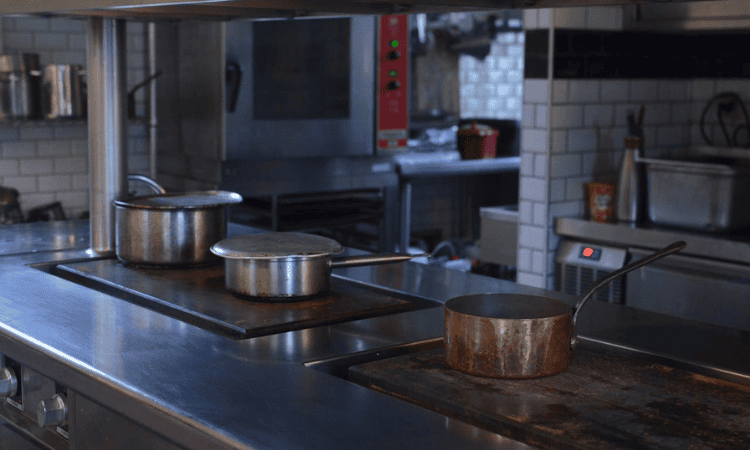
Several restaurants and small eateries across Kharghar have begun reducing business hours, limiting menu items, or temporarily shutting kitchens as commercial cooking gas becomes harder to procure.
Restaurant owners say the shortage has forced them to adjust daily operations, with some outlets choosing to operate only for part of the day while others are removing dishes that require long cooking time.
Hotel Hindavi, situated in sector 12, shared, “We have cut down on our menu, and during the evening we are only serving some chinese dishes for now.”
While most are somehow managing with the bare minimum stock of gas they already have, to keep their kitchens running, a number of eateries have also started experimenting with alternative cooking methods, such as charcoal-based stoves, which allow them to continue basic cooking without relying entirely on LPG cylinders. Some of the eateries are also using inductions stoves moderately.
Restaurant operators shared that although charcoal cooking was not ideal for every dish, it helped them maintain minimum operations until fresh gas supplies arrived.
What is causing the gas shortage?
For those still unaware, the disruption stems from shortages in commercial LPG cylinders used by restaurants and food businesses across India, owing to the ongoing middle east crisis.
Supply constraints and logistical delays linked to global energy markets have affected LPG distribution to the hospitality sector in several cities.
However, domestic LPG used in households has not been disrupted, as oil companies are prioritising residential supply.
On the Ground in Kharghar
On most afternoons and evenings, several food hubs in Kharghar, such as Hiranandani, Khargharcha Raja Lane, and others, remain lively well into the night, with diners moving between cafés, quick-service outlets and small eateries.
Over the past few days, however, the scene has appeared noticeably different.
Several outlets that usually operate late into the night have either reduced their menu or closed earlier than usual, while a few have temporarily shut operations until fresh gas supplies arrive.
These places still see visitors, but the familiar late-night bustle has softened.
Reports of commercial cylinders being sold at premium prices
Amid the tightening supply of commercial LPG cylinders, there have also been unconfirmed reports within the restaurant community of cylinders being offered at prices significantly higher than the official rate.
Some restaurant operators privately say that in a few instances cylinders have been available through informal channels at premium prices, far above standard commercial rates.
These accounts remain anecdotal at present, and there has been no official confirmation from authorities regarding black-market sales. However, the whispers reflect the pressure businesses are facing as they attempt to keep their kitchens running during the supply disruption.
Bachelors turn to quick survival meals
For many bachelors and young professionals living in shared apartments across Kharghar, the slowdown in restaurant operations has disrupted a daily routine.
With work schedules stretching late into the evening, several residents say they now find their regular eateries either serving limited food or closed by the time they return home.
Advit, an IT professional who travels to Powai for work along with his room mates, shares, “We leave for office early mornings and return around 8-9 pm. However, for the past two days, we have not been able to get our regular dinner at the restaurant we eat at in sector 12, behind Pranaam, as they have cut down on the menu and even serving hours. So we end up either eating a light meal or snack.”
The result has been a quiet return to quick survival meals, including the all-time favourite Maggi, bread and omelettes, and roadside snacks like vada pav, if at all available.
“We are back to our college days, cooking maggi at home, the one true love of every bachelor,” Advit adds jokingly.
Induction cooktops see rising demand
The fear of a pending household gas supply disruption has also influenced household buying behaviour.
Local appliance stores in Kharghar report increased demand for induction cooktops, as residents look for a backup cooking option.
Although domestic LPG supply remains normal, the restaurant gas shortage has prompted some households to prepare for possible disruptions.
Mrs. Tiwari, a resident of sector 35, who had just bought an induction plate, shared, “You never know in these war-like situations. So it is better to keep a backup for cooking. We just bought an induction plate today, and will try cooking on it, as we have never used one before.”
Retailers say many buyers mention the same concern: having an alternative ready at home if the situation worsens.
“Several of my friends have already bought induction stoves, fearing a possible disruption of supply,” Mr. Tiwari added.
Could electricity consumption rise in the following months?
Several residents believe that if the gas supply disruption were to extend to household cylinders — something that has not happened so far — the shift toward electric cooking could have wider implications.
A large number of homes relying on induction cooking would naturally increase electricity demand across residential areas.
Electricity bills could also increase
Needless to say, if household gas supply were to get disrupted, forcing residents to use induction cooktops, households may eventually see a modest increase in electricity bills.
Induction cooktops draw continuous power while operating, meaning regular use could gradually add to monthly energy consumption.
Residents who purchased induction plates say they hope the appliance remains an occasional fallback rather than a daily cooking tool.
Some residents are rediscovering home cooking
Amid the disruption, some residents say the situation has also nudged them toward home-cooked meals.
With fewer dining options available outside, several families and young professionals have begun preparing more meals at home over the past few days.
For some households, the change has been refreshing — a return to simpler and healthier home food.
Jatin, a collegian shared, “We go out every now and then for family dinners but lately a few of our favourite restaurants have been running half time, and half menu, more or less. As a result we have been cooking at home more, and frankly, it is like a throwback to good old home-made food times. We are kind of enjoying it.”
Street food vendors face the biggest risk
While larger restaurants may be able to manage temporary disruptions, small street food vendors, and tea stalls, often operate with limited reserves.
Many depend on a steady supply of commercial LPG cylinders to run their daily business.
The owner of Swadisht Vadapav, in sector 12, shared, “We sell fried items, like vada, samosa, bhaji, pattice etc., and these require a lot of frying, consuming a good amount of gas. With the low supply of gas, we are hardly able to manage cooking our daily food items.”
If supply disruptions persist, roadside food stalls and small eateries could face the most pressure, as they typically lack alternative cooking equipment.
Also read: Gas shortage forces several Kharghar tea vendors to return to coal stoves
What residents should know
The shortage currently affects commercial LPG used by restaurants, but household LPG supply remains normal at present. So while buying induction cooktops is a good precaution, there is no immediate need to start hoarding gas cylinders in panic.
A situation still evolving
For now, the shortage remains largely limited to commercial LPG supply. However, the developments of the past few days show how quickly disruptions in essential resources can ripple through everyday urban life — affecting restaurants, altering eating habits and influencing household decisions.
In Kharghar, both businesses and residents are watching the situation closely, hoping that restaurant kitchens will soon return to full flame.
Kharghar News will continue to track how the gas shortage affects restaurants and daily life in the locality.