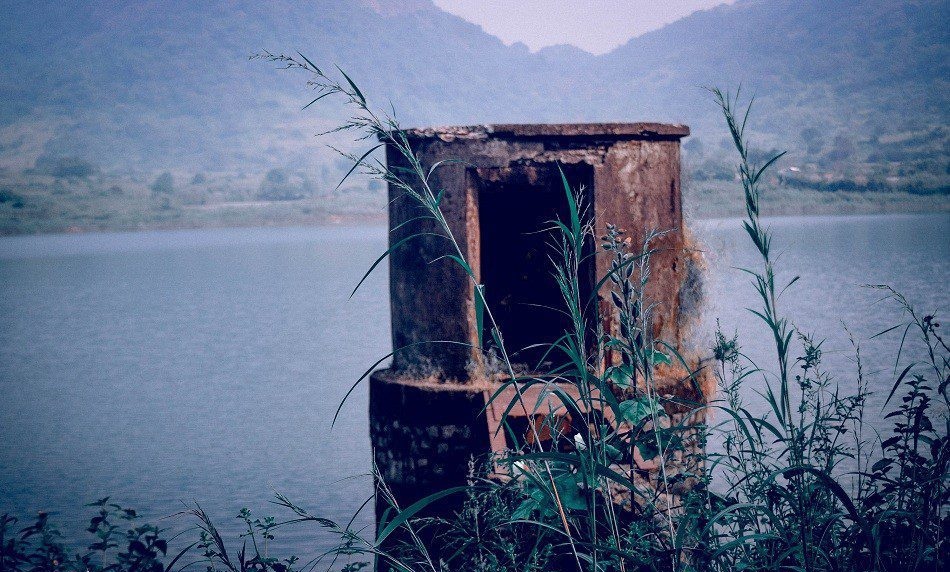
Tucked away in the folds of the Kharghar–Owe hills, Owe Dam is one of those places locals speak of softly, almost protectively. Not because it is grand or officially celebrated, but because it offers something increasingly rare in Navi Mumbai’s fast-thickening urban sprawl — silence, space, and a sense of unhurried nature.
Built as a modest structure on what is locally known as Owe Lake, the dam sits deep inside the forested stretches of Owe Village (Owe Camp), in the Panvel taluka of Raigad district. Surrounded on all sides by green hills that rise like natural sentinels, the waterbody feels fenced in by geography rather than concrete.
Not a tourist spot — but a familiar escape
It is important to say this upfront: Owe Dam is not an official tourist destination. There are no signboards inviting visitors, no facilities, no sanctioned picnic zones. Yet, over the years, it has quietly become one — shaped not by brochures, but by people who return simply because the place still feels untouched.
Unlike heavily exploited monsoon attractions such as Pandavkada Waterfalls or the driving range streams, Owe Dam has largely stayed away from crowds. Its relative isolation, coupled with uneven access and a lack of commercialisation, has ironically worked in its favour.
For first-time visitors, this is not a dramatic waterfall or a sprawling reservoir. It is a calm waterbody, framed by hills, fields and forest — the sort of place where nothing “happens”, and that is precisely the point.
The charm lies in what it doesn’t have
There is no noise here beyond the wind, birds, and the occasional rustle of cattle moving through nearby fields. During the monsoon, the surrounding hills turn a lush, unbroken green, reflecting softly on the still surface of the lake.
Sit by the water long enough and you begin to notice details city life often drowns out — distant village sounds, smoke curling from a chulha, children playing with sticks and stones rather than screens. Owe Dam offers a fleeting glimpse of rural life that still survives on the edge of Navi Mumbai.
Many locals describe the experience as oddly restorative. A few quiet minutes here, they say, do more for the mind than an hour spent navigating crowded cafés or pubs.
Monsoon favourite, all-year calm
While the monsoon months bring the dam to life — fuller waters, misty hills, richer greens — Owe Dam remains a year-round refuge for those who prefer stillness over spectacle. It appeals less to thrill-seekers and more to walkers, cyclists, photographers and people who simply want to sit and think.
Cyclists from across Navi Mumbai often pedal up to the dam in the early mornings, drawn by the relatively clean air and gentle terrain. A small pump-house structure near the water has also become a quiet landmark for nature photography.
Getting there — slowly, by design
Reaching Owe Dam is part of its character. From Kharghar Railway Station, one can take an auto, bus or shared transport towards Owe Village, followed by a walk through muddy forest tracks, especially during the rains. Roads are smooth till the village bus stop; beyond that, the landscape asserts itself.
For locals, walking or cycling remains the most rewarding way to arrive — unfiltered, unhurried, and in tune with the setting.
A place that asks for restraint
Because it is unofficial and ecologically sensitive, Owe Dam demands a certain responsibility from its visitors. There are no cleaners, no guards, and no safety nets. What you bring in, you take back. What you disturb, you alter permanently.
The dam’s quiet survival so far is owed largely to its low-key reputation. Whether it remains that way will depend on how gently people continue to treat it.
In a node often defined by infrastructure, traffic and construction dust, Owe Dam remains a reminder of what Kharghar once was — and what small pockets of it still are. Not loud, not curated, not crowded; Just present.