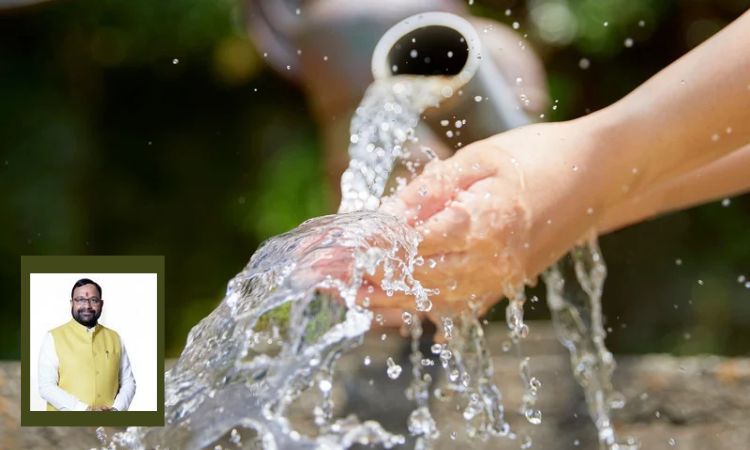
With Panvel’s population growing and residential and industrial development expanding, corporator Rajendra Sharma has urged Panvel Municipal Corporation (PMC) to strengthen its long-term preparations for potential water shortages.
In a memorandum submitted to Mayor Nitin Patil and Municipal Commissioner Mangesh Chitale, Sharma has called for a comprehensive survey of wells, borewells and other groundwater sources across the civic area. His proposals include testing water quality, improving groundwater recharge, assessing the need for new public borewells and preparing a separate water security plan for every ward.
The memorandum argues that the city needs a planned approach to water security rather than relying solely on temporary measures during shortages. Reduced reservoir levels, disruptions to major water pipelines and other interruptions to supply could leave residents facing difficulties, particularly during the summer months.
Survey existing water sources before drilling new borewells
Sharma has proposed documenting public and private wells and borewells across the municipal area, recording their current condition, water availability and groundwater levels during summer.
The survey would distinguish between sources that remain available throughout the year, those that dry up during summer and those that are no longer in use. He has also called for technical assistance from the Groundwater Surveys and Development Agency to assess groundwater availability and the potential for replenishment.
The findings could help identify areas most vulnerable to shortages and prioritise interventions.
The memorandum also recommends assessing local groundwater conditions before installing new public borewells. This would include examining the likely volume of water that could be extracted and the possible impact on nearby wells. Where drilling is unsuitable, Sharma has proposed prioritising the restoration of existing wells.
Water quality testing proposed for public wells and borewells
The memorandum stresses that the availability of groundwater alone does not establish whether it is safe to drink.
Sharma has called for samples from public wells and borewells to be tested by recognised laboratories. The proposed checks would cover chemical contaminants and microorganisms, including E. coli, with reports prepared to establish the quality of the water.
Areas at risk of industrial wastewater contamination or other forms of pollution may require additional testing. Where a source is found to be contaminated, the civic body should arrange appropriate treatment or provide an alternative supply, the memorandum proposes.
It also recommends publishing water quality reports on the municipal corporation’s official website so residents can access information about the safety of local water sources.
Rainwater recharge measures to be expanded
Alongside managing groundwater extraction, the memorandum calls for greater efforts to replenish underground reserves by capturing rainwater.
Potential sites for rainwater harvesting and groundwater recharge structures include municipal schools, hospitals, offices, gardens and suitable government-owned plots. The proposed structures would need to be designed according to local geological conditions and maintained regularly.
Sharma has also called for checks to ensure that sewage and industrially contaminated water do not enter groundwater recharge systems. Residential complexes and large construction projects should be inspected to establish whether their rainwater harvesting systems are operational and comply with applicable regulations.
Contingency plans for water supply disruptions
The memorandum proposes preparing a ward-wise list of alternative water sources to help residents if the regular supply is interrupted. Depending on local requirements, the civic body could also consider public storage tanks and distribution arrangements.
For tanker-based supplies, Sharma has recommended maintaining records of the water source, quality, distribution schedule and areas served.
Water-stressed settlements, slum areas and remote localities should receive priority, according to the proposal. Each ward should have a designated officer and contact number for water-related complaints and emergencies. Residents should also be informed promptly through official channels when supply disruptions occur.
Proposed 60-day timeline for ward-level plans
A central recommendation is to prepare a separate water security plan for every ward, based on the municipal corporation’s official ward boundaries.
The proposed plans would document existing water sources, vulnerable areas, groundwater levels, locations suitable for recharge structures, infrastructure requirements, estimated costs and implementation timelines.
Sharma has also called for a joint technical committee involving relevant municipal departments, the Groundwater Surveys and Development Agency, the district administration and, where required, representatives of CIDCO, MIDC and other relevant agencies.
The memorandum sets out the following proposed schedule:
- Within 15 days: Prepare a preliminary inventory of water sources.
- Within 30 days: Inspect priority sources and conduct water quality tests.
- Within 45 days: Prepare ward-wise action plans.
- Within 60 days: Begin phased implementation of works that have received the necessary technical and administrative approvals.
It also proposes monthly reviews of progress, with reports made public.
The deadlines are recommendations put forward by Sharma in his memorandum; they should not be taken as an approved municipal schedule.
The proposals seek to establish a more systematic approach to Panvel’s future water needs, combining an assessment of existing groundwater resources with conservation, recharge measures and contingency planning. Their implementation would depend on the municipal corporation’s response, technical assessments, approvals and available resources.