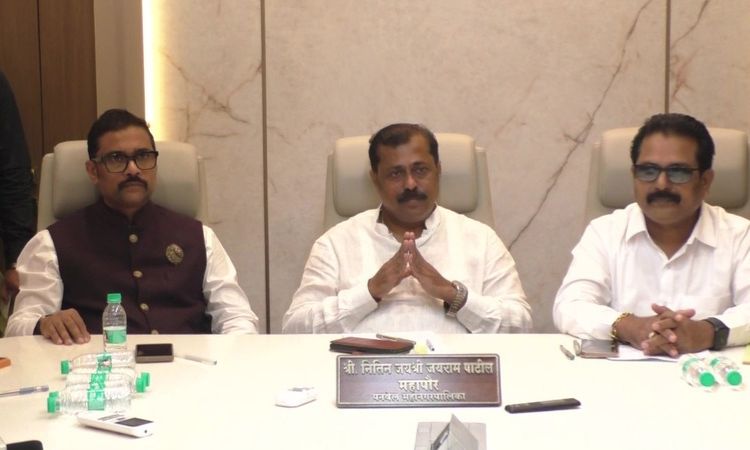
The Panvel Municipal Corporation (PMC) is conducting physical inspections of 106 Ganesh immersion sites to verify the work carried out during this year’s Ganeshotsav celebrations in Navi Mumbai, with the administration stating that contractors will be paid according to the work actually completed.
The exercise covers 77 artificial immersion ponds and 29 natural immersion sites across the municipal corporation’s jurisdiction.
The inspections follow allegations raised by Shiv Sena (UBT) corporator Leena Arjun Garad regarding irregularities in the works undertaken for the immersion arrangements. Responding to the allegations at a press conference on Monday, PMC House Leader Adv. Prakash Binedar rejected the charges and said the administration was already examining the work on the ground.
Binedar said the final bills would be processed only after the relevant works had been inspected, measured and assessed. The administration is checking the extent of work completed at each location, whether it meets the specifications in the respective contracts and whether the facilities listed as part of the arrangements were actually provided.
The civic body’s position is that the amount eventually paid to contractors will be determined by the actual work recorded during the verification process, rather than simply by the amount mentioned in the contracts.
What was provided at the immersion sites?
The PMC had made arrangements at 106 locations to manage the large crowds expected during Ganesh idol immersion.
Alongside the artificial ponds, the facilities included barricading, electricity connections, lighting, CCTV cameras, medical services, nirmalya collection, security arrangements, additional manpower and traffic management.
The objective was to allow devotees to complete the immersion process in a safer and more orderly manner, while providing facilities at locations across the municipal area.
Allegations remain under examination
Garad’s allegations concern whether the works and facilities specified under the contracts were actually executed at the various immersion locations.
The civic administration has countered that a conclusion regarding financial irregularities cannot be reached before the physical work is examined and the relevant measurements and documentation are checked.
That leaves the matter at an interim stage. The allegations have been made, but the administration’s verification process has not yet established a finding of financial misconduct.
The final position will depend on the inspection reports, measurements, assessment of the completed works and the subsequent processing of contractor bills.
Property tax enters the political exchange
The press conference also brought the wider issue of property tax into the discussion.
Binedar questioned calls attributed to Garad asking residents not to pay property tax, arguing that the levy forms an important part of municipal revenue and contributes towards civic services such as water supply, roads, sanitation, healthcare and street lighting.
He also criticised the use of the term “jizya tax” in connection with property tax. The civic side argued that a modern municipal property tax should not be equated with jizya, a historical levy imposed on non-Muslims under certain Islamic regimes.
The exchange has consequently expanded beyond the Ganeshotsav works into a wider political disagreement over civic administration and taxation.
Verification will determine the next step
For the PMC, the immediate issue is now the physical assessment of the 106 immersion locations.
Officials are checking what was actually provided at each site and recording the relevant measurements before the final bills are determined.
The outcome of that process will establish the amount payable to contractors. Until then, the allegations of irregularity remain claims under examination rather than an established finding of wrongdoing.