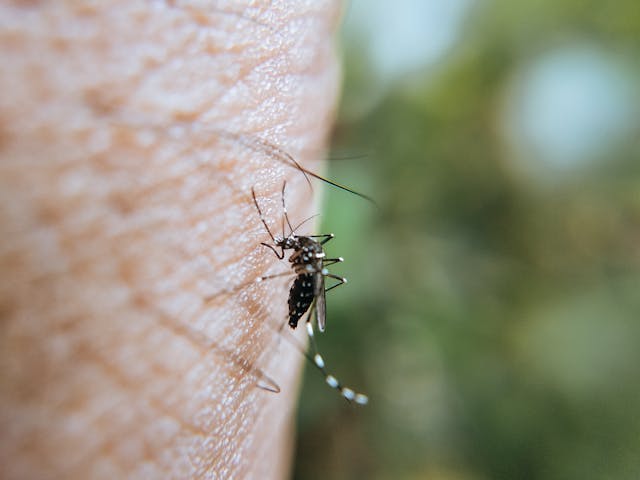
Evenings in Sector 35 are no longer the gentle wind-down they once were. From around six or seven in the evening, mosquitoes begin to gather in unsettling numbers — not a stray handful, but thick swarms that make a short walk downstairs feel like a calculated risk. Residents say the pattern has grown sharper over the past few weeks, stretching well into the early hours of the morning.
What sets Sector 35 apart is the canal that runs through the area — a defining feature of the neighbourhood and, increasingly, a suspected culprit. Several residents believe stagnant patches or slow-moving stretches along the canal may be turning into breeding grounds, especially where vegetation has grown dense or water flow is inconsistent.
While there is no official confirmation linking the canal directly to the surge, the timing and concentration of the problem have led many to draw that connection. “The mosquitoes seem worst in buildings closer to the canal side,” says Mr. Kapoor, who resides in Maitri Planet in sector 35 I. “The canal is one of the main reasons for sure.”
Households have adapted in the only way they can. Balcony doors shut earlier. Mosquito bats hum through the evening. Vapourisers run continuously. Sleep, however, remains disturbed. Parents speak of children waking repeatedly. Working professionals admit mornings now begin with fatigue rather than freshness.
As a matter of fact, mosquito bats, odomos cream, mosquito repellents are selling like hot cakes in the area.
Periodic fumigation drives by the Panvel Municipal Corporation have been noticed, but residents say the impact is fleeting. Within days, the swarms appear to return with the same intensity.
Importantly, this does not appear to be a widespread Kharghar issue. The surge seems largely concentrated in Sector 35, with parts of Sectors 34 and 36 reporting similar discomfort. That makes targeted action — especially around canal stretches — all the more necessary.
The concern goes beyond irritation. The fear of dengue, malaria or viral infections lingers quietly in conversations, even if no major outbreak has been officially reported. The psychological strain of constant swatting and interrupted sleep is, in itself, taking a toll.
Sector 35 was once marketed as a well-planned residential pocket with open air and breathing space. Today, as dusk falls, many families brace themselves for another long night battling with the mosquitoes.
If the canal is indeed part of the equation, then cleaning, desilting, ensuring proper water flow and sustained anti-larval measures may be more effective than sporadic surface fumigation.
For now, in this part of Kharghar, evenings belong not to conversation or quiet walks — but to the hum of mosquito bats and a community waiting for lasting relief.